
Step Thirteen - Discover Horsemanship Philosophy & Methodology in the Round Pen
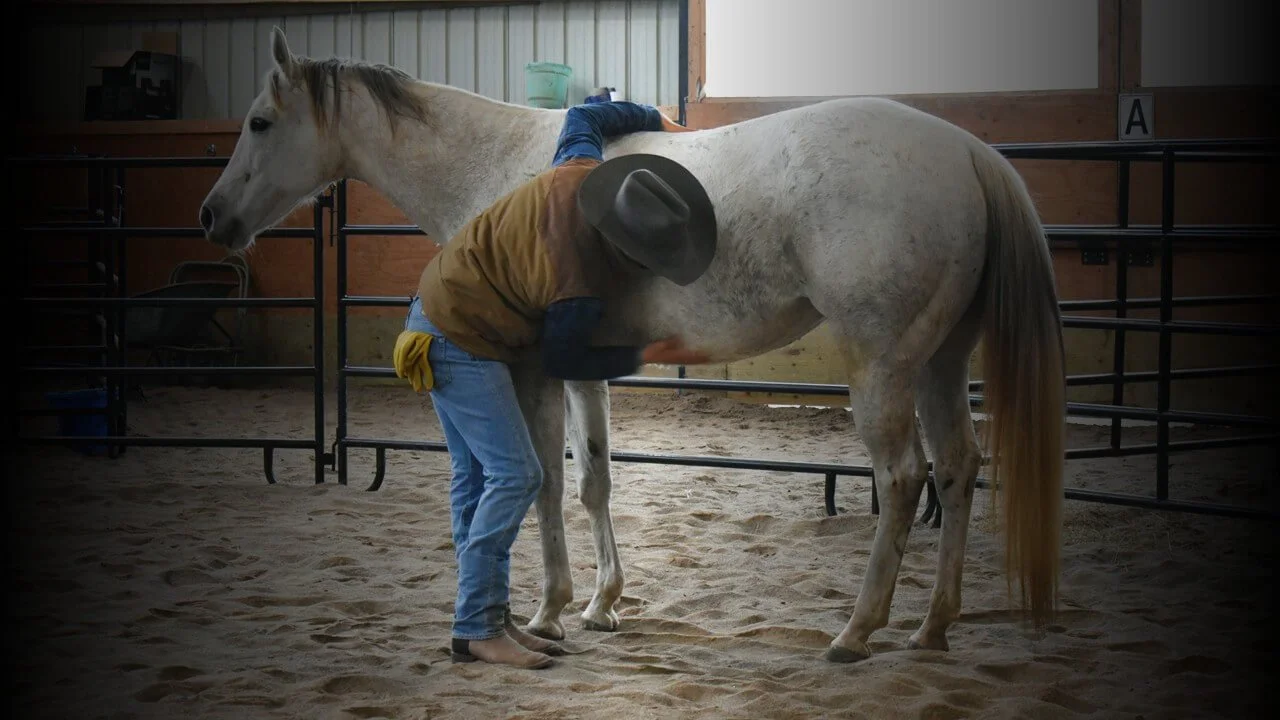
Round Pen - Whole Body Confidence with Hands
Step Thirteen - Whole Body Confidence and Trust Building with your Hands - Discover Horsemanship Philosophy & Methodology in the Round Pen
Goals:
Horse learns to trust and accept physical touch from human hands in both sides and whole body of the horse
Horse absorbs energy through human hands
Horse learns love & care through human energy
Horse learns to stand still, relax and control emotions
Human learns to love & care for the animal
Building trust and confidence and creating a relationship between horse and human
Obstacles and objects used to further build confidence and trust
Preparing the horse for saddle pad and saddle
Problems Solved:
A body shy and nervous horse
Lack of confidence and trust with human
A horse that will not join up
A horse that will not accept a saddle pad or saddle
A horse that will not stand still while mounting
I am very excited to share with you my next step, number 13, titled “Whole Body Confidence and Trust Building with Your Hands.” I truly believe that a tremendous amount of philosophy, deep mystery, and, some might even say, a touch of magic occurs between the horse and the human during this significant step. To me, this next phase represents the very heart and soul of the communication that exists between me and my beloved horses. As you have already read in my introduction and discovered how I was raised by my loving parents, along with the substantial influence they had on shaping my life, you will begin to gain a deeper understanding of who I am and how profoundly important the love of all animal life is to me.
In our family home, we had a wonderful library full of knowledge, where information and wisdom were passed down through generations. There were books on every topic you could imagine. However, my father had the greatest influence on me during my childhood. He shared his love for animals and nature, helping me appreciate the world around us. My father was kind and gentle, treating everyone with warmth and respect, and showing compassion to all living things.
As a child, we had three fish tanks at home. My father took great joy in caring for the fish and learning about them. Whenever he walked by, the fish swam eagerly to the front, making us think it was because he fed them. To test this, we had him walk back and forth in front of the tank, and the fish followed him closely. In contrast, when my mother, brother, and I tried the same, the fish ignored us, even with food. What would you call this intriguing phenomenon? It certainly piques my curiosity.
In another example of this wonderful connection with living things, my father also had a profound love for flowers, and I truly believe that they reciprocated this affection in their own unique way. You may say that this is impossible, but I firmly maintain that it is indeed possible. I have witnessed with my own eyes this amazing love that blossomed between them, and it was truly remarkable and heartwarming to observe.
My father took exceptional care of a remarkable cactus that was famously known to bloom only once a year. However, much to everyone's amazement and delight, this extraordinary cactus bloomed an astonishing seven times each year and was consistently adorned with vibrant flowers. People often came from near and far to visit and witness this botanical marvel because no one quite believed it was true. My father's devotion to this plant was evident, as he poured his love and attention into its care; I can't help but wonder if there is a specific word that captures what he felt for it. It was something profound deep within him, a unique way that some people express their love for animals and all living things. He would often converse with the fish and flowers, and I have a strong belief that they, in turn, loved him back. Additionally, he saved many injured animals and birds with broken wings or legs, always finding creative ways to help them and give them another precious chance at life.
I watched all of these remarkable things unfold before my very eyes while growing up alongside my father, and I have come to realize the kind of man he was and the type of person he exemplified consistently throughout his life. I am incredibly proud to call my father a true gentleman, and I feel immensely fortunate to have him as my father. I absorbed all of his invaluable teachings and admirable qualities like a sponge, often not even realizing the profound impact they had on me at the time. However, I don’t believe that I could ever truly come close to becoming the man that he was. I firmly believe that these extraordinary individuals, like my father, are born only one in a million. I am extremely proud to have had the wonderful parents that I had, and their influence has significantly shaped who I am today. Therefore, I sincerely hope that by sharing these heartfelt stories from my life, you will begin to understand some of the foundational concepts in my horsemanship, as well as the guiding ideas and thoughtful reflections that shape my practices.
Getting back to our important steps and working collaboratively with our horses, I would like to take a moment to share with you the next critical step in building trust and confidence with our horse through the gentle, thoughtful use of our hands. This approach emphasizes the significance of connection and understanding. Additionally, I will share some more insightful stories and practical examples drawn from our real-life experiences in the field, so that you may gain a much deeper understanding of my ideas and methods, and how they can apply to your own journey with your horse.
In an illustrative example with your horse standing in a stall, you may gently open the door and invite your horse to come over to you. However, the horse may completely ignore your request and continue to chew on their hay or perhaps even turn and face you with their hind end instead. My assessment of this situation is that we have not yet established a solid foundation of confidence between the horse and ourselves. This lack of connection is also evident in moments when you might unexpectedly raise your hands very quickly around your horse's head, prompting them to raise their head in the air as a reflex. Once again, we encounter the same issue: a deficiency in trust and confidence. In yet another scenario, when you wish to catch your horse in a paddock, and your horse either ignores your presence or runs away from you, the underlying cause remains consistent: insufficient trust and an absence of confidence. This highlights that there has been no meaningful relationship built between you and your horse.
People often take away their horse's confidence, even without fully realizing the impact of their actions. I have witnessed a person strike their horse in the face simply because they felt the horse was being overly nosey or inquisitive. In that moment, they immediately robbed the horse of its confidence. The same detrimental effect occurs when individuals raise their voices and yell at their horse; once again, the horse's self-assurance is negatively affected.
Let's open our minds and utilize our imaginations, while also opening our hearts to new ways of connecting with our horses. Many times, I have observed people rewarding their horse by patting the animal on the neck or hip while saying phrases like "good boy" or "good girl." These well-meaning individuals may believe that such actions constitute enjoyable rewards for their horses, as they express their happy feelings in the moment. However, they often overlook the possibility that this might not feel pleasant or comforting for the horse itself. Imagine for a moment if your boss at work or a loved one, such as your husband, wife, or child, were to tap you on the head or neck as a way to acknowledge your good work. Would that feel like a positive reinforcement to you? Have you ever witnessed a mare gently taking her tongue and tapping her colt to show him her love? Her gesture is soft and caring, as she licks him lovingly to express her affection. So let’s reflect on this and, in a similar fashion, use our hands to gently rub and stroke our horses to show them the love and kindness they truly deserve.
So we want to build this same very important trust, confidence, and love with our horses during this crucial step in their training. I always emphasize during my clinics or seminars—when I am sharing the lessons derived from my Philosophy & Methodology in the Round Pen—that your hands are the most vital tool we possess in this journey. You cannot purchase a better tool or create a more effective instrument than your own hands. So how do we achieve success in this pivotal step? It is quite simple, my friends; we have already laid the foundation with the previous steps. Our horse is no longer afraid of the lariat, understands how to stand still while facing you, and can remain calm as you walk around and gently throw the lariat over them, demonstrating their trust in you. Moreover, you have successfully cultivated your horse's trust from the front end, ensuring they do not run away from you when you approach. Now, let us work on putting this puzzle together and accomplishing our next goal in this important step of training.
So let’s return to the round pen and take some time to thoroughly explain to our horse how to build this essential confidence through our body language and movements. If you successfully complete this important step, you will be genuinely amazed at how effortless it will be to put the saddle on your horse for the very first time. Additionally, this approach will create a more positive experience for your horse's mind, resulting in a significantly safer interaction for both you and your equine partner.
We will begin our session by asking our horse to travel forward at a steady pace, and after a couple of revolutions around the round pen, we will then ask our horse to stop and face you. Once your horse is in position, you will proceed to walk towards him, initially shifting your direction to the left and then to the right. It is crucial in this step that you are the one actively walking toward your horse rather than the horse approaching you. This particular action is one of the main steps that significantly aids in building trust and a solid relationship between you and your horse. When the human approaches the animal, and the horse remains calm and does not flee, it undeniably demonstrates that a genuine bond of trust and a meaningful relationship is being established. This scenario serves as a prime example of how my approach to horsemanship differs in both philosophy and methodology within the round pen environment. I deliberately choose when I will move toward my horse, ensuring that it is not the horse that decides when to come to me.
When I approach the horse for the very first time, it is crucial to ensure that you intentionally leave your horse shortly after your arrival, allowing both you and the horse to establish mutual understanding. The horse should remain standing still and patiently wait for your next move. You should diligently repeat this process a couple of times, and with consistent effort, you will begin to observe that your horse will genuinely desire to follow you as you move.
We will then start by bringing our horse to the center of the round pen, gently securing the halter in place while lightly holding onto the end of the lead rope. At this point, you will take the most crucial tool at your disposal, which is, of course, your hands. Begin to rub your horse with care, starting from the muzzle and continuing all the way down to the hind hoof on both sides of its body. Start this process in a specific order: first, focus on the horse’s face, then move to the neck, followed by the shoulders. After that, proceed to the front legs, then transition to the back, and finally address the hindquarters and hind legs, but remember not to touch under the belly just yet.
When I say rubbing, I mean that you have to take your heart in your hands and give all of the love that you have, then transfer this energy deeply to your horse. You can even make your horse actually fall asleep during this soothing process if you spend ample time and care in this crucial step. You will begin to notice that your horse will lower his head and his bottom lip will become soft and relaxed, while his eyes will take on a dreamy, peaceful quality. The horse will communicate to you that he feels confident and secure in your presence through his body language, and you can genuinely feel him asking you to continue this affectionate interaction, as it feels incredibly good to him. You will both feel and see that your horse will truly melt in your hands; their muscles will gradually become soft and supple, and the horse will become increasingly relaxed. As this happens, the trust and confidence between you will grow stronger and more profound, creating a beautiful bond that enhances your relationship.
You can purchase the most expensive and advanced tools available for training your horse, but you will never truly be able to put a price on the unique qualities of your hands or the depth of your soul. These are the elements that represent your energy and intention, which are being transferred to your horse in every interaction. It is crucial to recognize that through your hands, you can convey not only the positive and encouraging aspects of your training but also the negative, harmful, and uninformed messages, which is absolutely not what we want to communicate with our beloved animals.
This pivotal step in my Philosophy & Methodology in the Round Pen is focused on naturally building both confidence and trust with your body language. It is an important process that can be accomplished without the use of aggression or any physical tools—just the trust and confidence that you have thoughtfully nurtured between you and your horse. I often refer to this experience as magic, and I invite you to embrace that notion. So, please engage your imagination, open your heart, and truly love your horses. By following these carefully outlined steps, you will witness how your horse begins to trust you and accept you not just as a leader, but as a true friend. We all understand that, while we have the ability to dominate through means like ropes, bits, saddles, and whips, which allow us to make horses comply with our desires, I believe that this approach falls short of what true horsemanship should represent.
Also, please remember that building trust and confidence between you and your equine partner takes a significant amount of time, dedicated effort, and a great deal of patience. It is important to keep in mind that a momentary lapse or a single negative experience can undermine that trust, and once it has been lost, the process of rebuilding it can take even longer than the initial effort required to establish it. Therefore, always strive to be kind and understanding towards your horse, as this approach will not only benefit them but will also result in you receiving more than you initially give.
Please take your time and patiently complete all of the necessary steps outlined in my philosophy and methodology while working in the Round Pen. Enjoy the process of building a safe and trusting relationship between you and your horse. As you progress, you will discover a true partnership that is grounded in love, mutual understanding, and open communication. Remember, this is a rewarding journey that is developed gradually, step by step, and each moment contributes to the strong bond that you are creating together.
To learn more about the complete step by step program including tutorial and videos of “Discover Horsemanship Philosophy & Methodology in the Round Pen” join Russ Krachun Performance Horsemanship at the “True Grit Academy” Virtual Education.